This Winslow Road renovation is ideal for the close-knit Ciuni clan and their commitment to family, faith and food.
By Michael Peters
Photos by Kevin Reeves
The plan for Shaker Heights as envisioned by the Van Sweringen brothers was to offer a variety of housing options – apartments, two-family homes, single-family homes – on a variety of lot sizes. Winslow Road was an important piece of this plan, offering exclusively two-family homes that were designed to look like large single-family homes. That character remains today, with most visitors likely unaware that each house is in fact two separate units.
The majority of the houses on Winslow Road were built between 1924 and 1929. As with all Shaker Heights homes, they had to be architect-designed, built in English, French, or Colonial style, and be of high-quality material. Several prominent architects designed homes on Winslow, with George Burrows designing 43 out of 170.
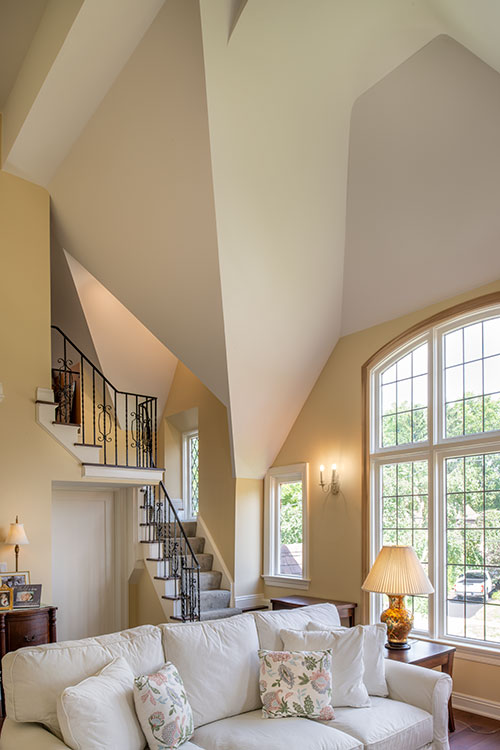
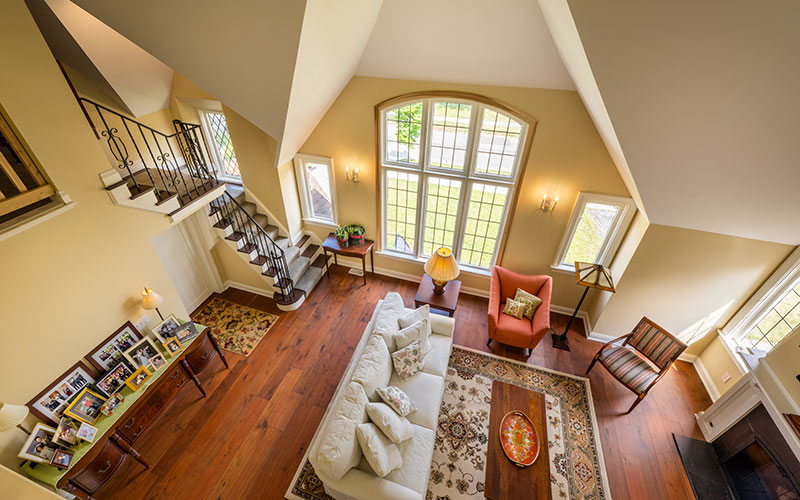
 One of these, in a Tudor Revival style, was built in 1928 between Lynnfield and Norwood roads. Situated on the south side of the street, its large double-height leaded glass windows capture the northern light, almost like an artists’ studio. This obscures the fact that it is a large three-story house, with one unit on the first floor and the second unit encompassing both the second and third stories.
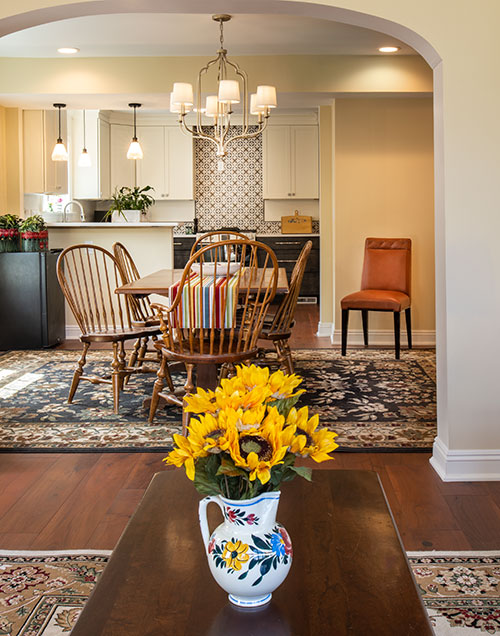
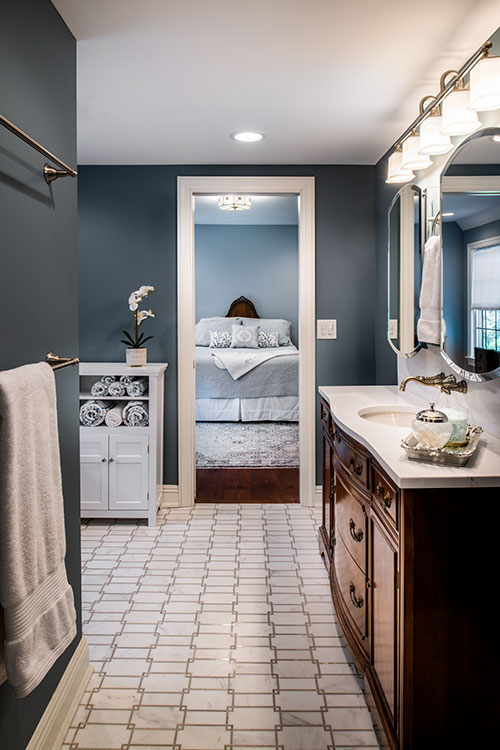
The first-floor unit has a spacious main bedroom with an ensuite bathroom and large walk-in closet. The second unit has a nearly identical layout, with two additional bedrooms and another full bath on the upper, or loft, level. Both units also have a half bath off the dining area.
This was not, however, the layout in 1928. While changes to the floorplan were likely made over the years, by 2017 each level had three small bedrooms and two bathrooms. That was also the year that an electrical fire started on the first fl oor and burned its way to the roof, opening up a gash in the center of the house.
The house had been in the same family for over 30 years. They made repairs to the roof, but the house remained unoccupied for several years after they put it on the market. The right buyer was elusive. Fortunately Joe and Mary Jo Ciuni had been looking for a home after downsizing, and Winslow Road was on their wish list. Joe grew up in the area. He and Mary Jo, who grew up in suburban Chicago, settled in Cleveland after attending college in Indiana. Several of Joe’s siblings along with his children and grandchildren had also settled in Shaker Heights or the surrounding communities over the years.
Joe also has another long-standing connection to the City: He has been a consulting civil engineer to the Public Works Department since 2008. His father, who is also a civil engineer, was also a consulting engineer for the City starting in the mid-1970s, through an engineering firm where he was a partner. That firm merged with GPD Group of Akron in 2007, where Joe is director of Public Works in the Cleveland office. Renovating a nearly 100-year-old house gutted by fire may have needed a family of engineers.
“Many people told us not to do it,” Joe says. But with access to a nationally-recognized office of architects and engineers, along with family members in the building trades, the Ciunis closed on the purchase in January last year.
 Details Matter
Family, religion, and food are the guiding principles of life that Joe’s Sicilian grandmother instilled in him from a young age. As they designed the renovation of the house, the Ciunis were able to incorporate all three seamlessly.
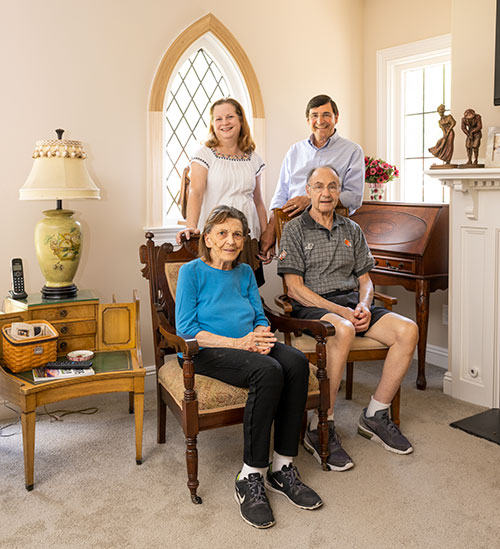
One of the motivations for choosing the Winslow Road house was the ability to move Joe’s parents closer to the family. After retiring, his parents moved to the East Coast near the ocean, but as they aged the family wanted them nearby. They live on the first fl oor. Fortunately the homes on Winslow Road were designed to have no more than a step or two up to the front door, allowing for easy access.
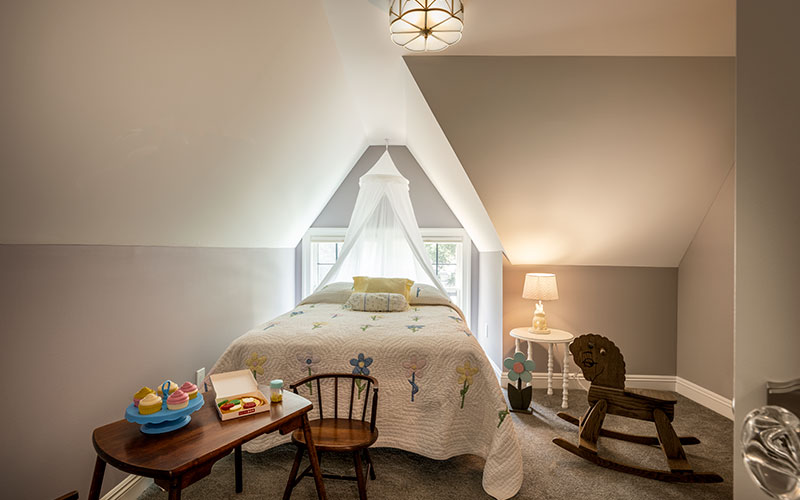
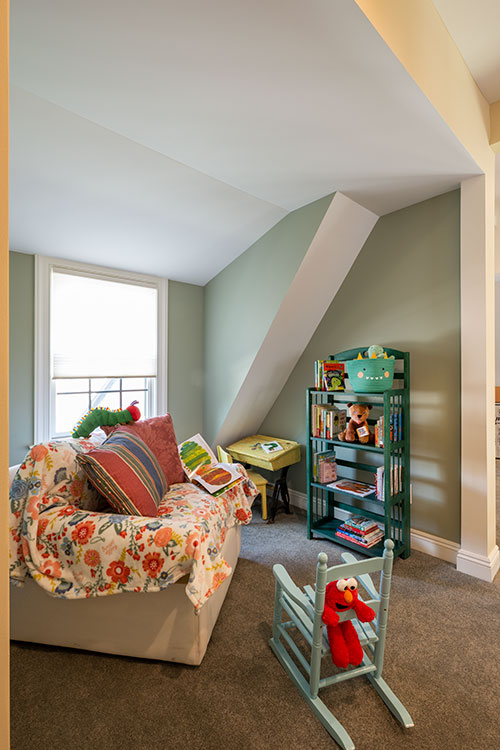
And with so many family members in the area, the house is a multigenerational gathering place. Mary Jo – a retired childhood educator – has created a play and crafting area in the loft adjacent to the bedrooms where the grandkids can enjoy sleepovers with their grandparents while popping downstairs to visit with their great grandparents.
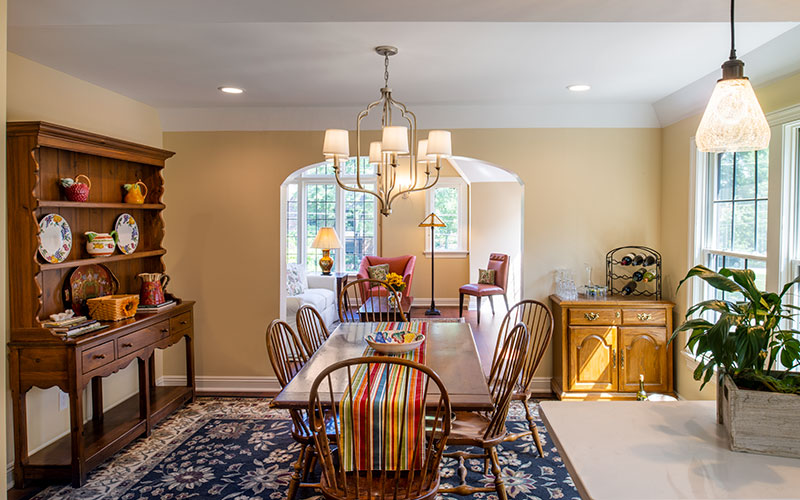
The house sits directly across Winslow Road from the Church of St. Dominic, where the Ciunis are parishioners and Mary Jo was on staff before retiring. During the pandemic, St. Dominic’s began holding an afternoon outdoor mass on Saturdays. This allows Joe’s parents to sit in the front yard for mass. And with spacious open-plan kitchens in both units, food for the entire clan can be served and shared in the dining room, in the double-height living room of the upstairs unit (especially while watching a game), or on the expansive rooftop deck.
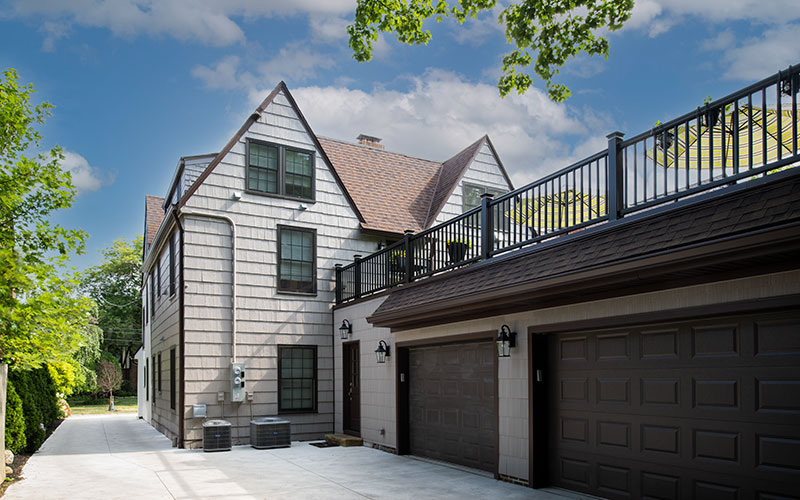
The deck is one of many creative features built into the house, and one of the most remarkable. As part of the renovation, the old garage, which was in poor repair, had to be taken down as the foundation was waterproofed and other exterior upgrades were completed. In designing the replacement, the Ciunis worked with the City’s Board of Zoning Appeals and Architectural Board of Review to create an attached garage with a connecting laundry room (so the senior Ciunis could enter without going outside). The rooftop deck was the master stroke: a maintenance free back yard that has been moved to the garage roof.
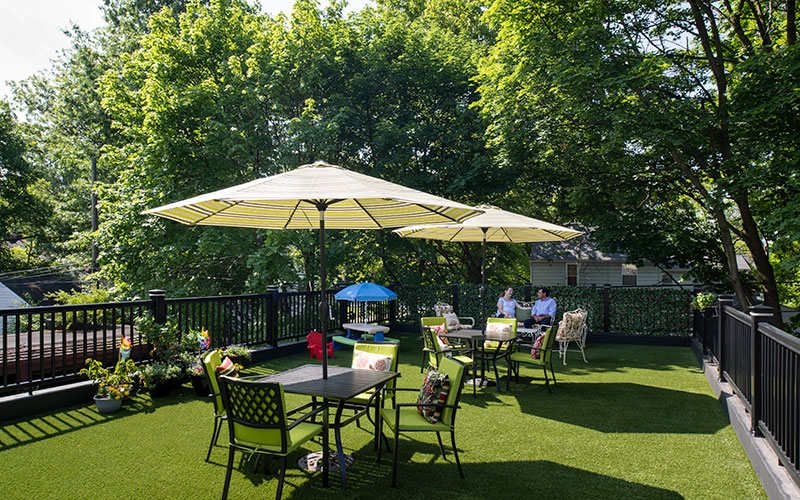
This design created usable space in an area that was otherwise underutilized, providing extra storage and featuring an electric vehicle charger. Details such as entering the garage directly from the house, wider doors on the lower level to potentially accommodate a wheel chair, and a low maintenance yard were intentional: They will allow the Ciunis to age in place. However, all of the upgrades were integrated into a home that retains its historic character. The Ciunis knew they wanted a combination of an architecturally distinctive house but with modern amenities. The house they found, still gutted on the interior from the fire, provided them with a blank slate for the interior, while the exterior remained true to its original appearance.
Mary Jo, who grew up in the architecturally-rich Chicago suburb of Oak Park – the location of the Frank Lloyd Wright Home and Studio – explains, “We wanted to be true to the history of the house and the neighborhood.”
This can be seen through the color choices, the custom iron railing for the staircase up to the loft, and even to the choices for the door handles. As with any Shaker Heights renovation there were a few surprises along the way. Early in the demolition process they discovered a small powder room on the first floor that had been walled over. The price of lumber skyrocketed so they built the garage with metal studs – which are typically more expensive than wood but suddenly became the more economical choice. And, because this was happening in the midst of a pandemic, there were supply chain delays with the windows.
Given all of this, it is all the more remarkable that the Ciunis moved in 11 months after they closed on the purchase. While a few small items remain, the renovation demonstrates that an historic house, in an historic district, can be modernized to provide the perfect place for another hundred years of faith, family, and food.