A Mercer couple takes the experience of caring for elderly relatives and pours it into a thoughtful process of renovating a home they can age into.
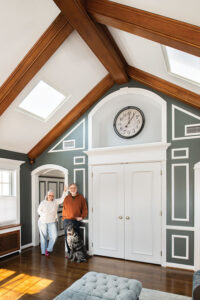
Pat and John Chapman with their dog, Dazzle, in doorway of their second floor sitting room.
By Sharon Broussard
Pat Chapman has a saying about her Shaker home in Mercer: “We will be here until time no longer matters.” For the last four years, she and her husband, John have done a lot to make that dream come true.
John, 74, a retired accountant and Pat, 72, a retired teacher, who calls herself a “pioneer woman,” who knits, cooks, and bakes, renovated their 1932 three-story home into a place where they can age in place and where everyone in the family is welcome.
And they mean everyone – the couple are well known in this area for adopting six boys along with their four biological children. Their children now range in age from 27 to 48.
Neither Pat nor John wants to think of moving elsewhere as they grow older. They like the walkability of their neighborhood, their friendly neighbors, and the buzz of Shaker Middle School across the street. “You can see the kids playing soccer or baseball or field hockey. You see kids on their bikes,” explains John. “I can see parents pushing strollers. That to me is what life is about. It’s not about being shuttled off to another place.
Experience as Guide
Fortunately, they gained practical experience in the challenges of aging when they spent time caring for their two mothers, in Pat and John’s living room. Pat’s mother lived with them for twelve years and John’s for five – their stay overlapped for five years. Their mothers died a decade ago.
But living in tight knit quarters amplified daily mobility challenges. They couldn’t get up the stairs or use the kitchen. Sometimes the two women would need to coordinate who would leave the room first in their bulky walkers and wheelchairs.
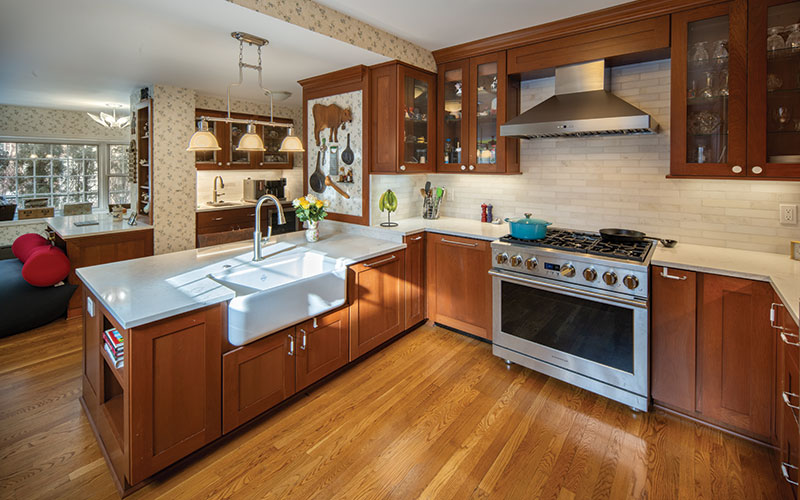
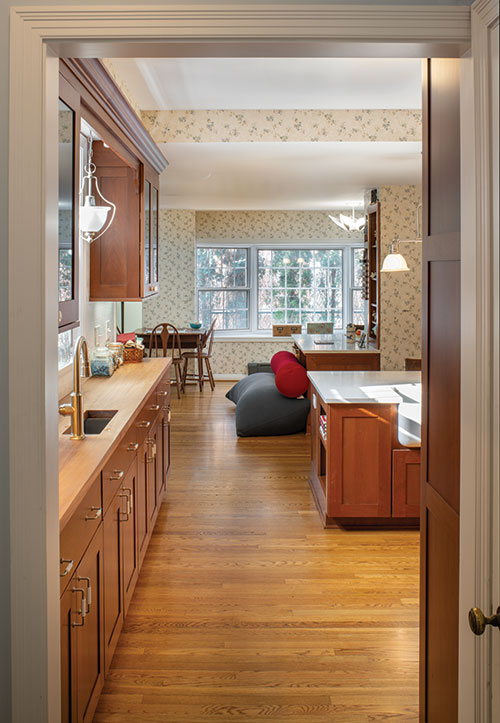
The kitchen footprint was widened to allow for a wheelchair to move 360-degrees without obstruction. Also, a new lower peninsula makes it easier for sink access on one side and on the opposite side, the lack of lower cupboards frees up room for a wheelchair to roll under.
“Really, having the grandmas was a blessing,“ says John with a laugh. “We developed a good idea of what this house didn’t have and needed.”
Using that experience as a guide they got to work with Jim Karlovec, owner of Karlovec and Company, a design, build, and remodeling firm based in Shaker.
“Now everything is ADA (American with Disabilities Act) compliant in the kitchen, in the bedroom, and in the bathrooms that we would use as seniors,” says John, who volunteers with the National Alliance of Mental Illness.
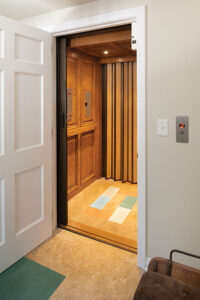
The two-story elevator opens to the garage, stopping in the mudroom and second floor dressing room. The trip from the garage to the mudroom is a short one, covering only a foot. But the return is big – it eliminates the time consuming and physical task of moving a ramp into position each time a wheelchair needs to enter the house from the garage. The flooring is melamine, which is durable and soft and is patterned after the stone colors in the home’s main entryway.
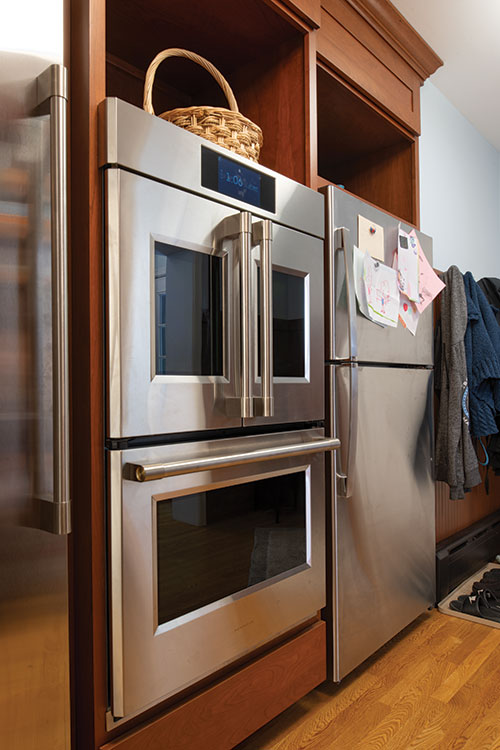
Safety, self-care, comfort, and consistency in their renovations were their top priorities. The renovated kitchen has a lower sink and counters so that a wheelchair user can move about and wash their own dishes.
They also made it an easy walk from the heated garage, which stores a car and gym equipment, to the elevator that can take them up to a second floor. An ADA compliant bathroom is also nearby.
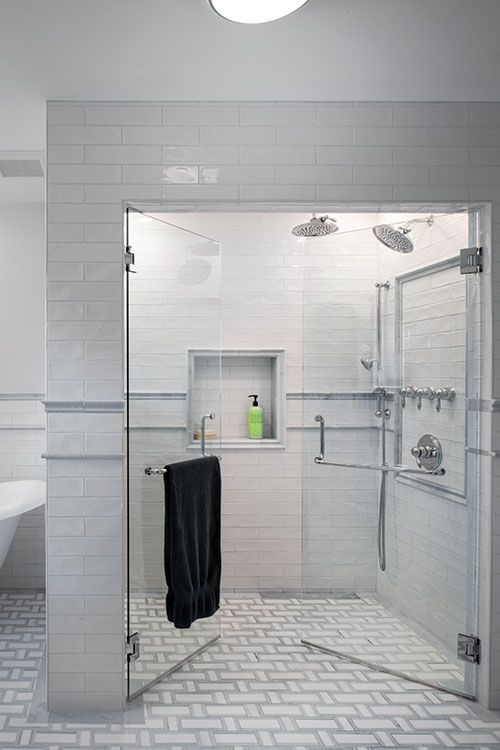
Upstairs, they widened doorways and made the main bathroom an ideal combination of safety and comfort. There’s an ADA compliant sink and a two-person shower that is “big enough that an aide can be in there at the same time,” says John.
A few feet away from the main bedroom they built an aide’s room with a chair bed, a small refrigerator, coffee machine, microwave, and a little closet, in case an attendant needs to stay overnight.
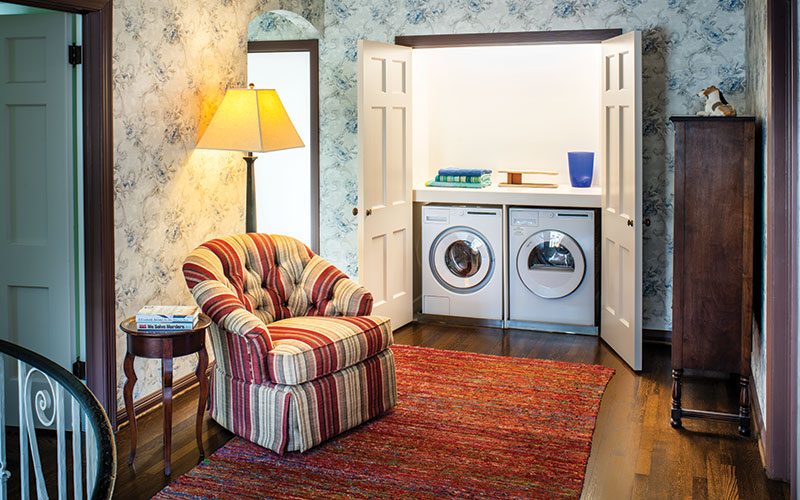
And they didn’t just think about their future life as fragile elders but also about renovations they want to use right now. Light streams into a new sitting room above the garage, built so that John, who cannot stand the cold, can enjoy even the most wintry day. The main bathroom also has a soaking tub.
Hardwired routers are spread throughout the house so they can have steady internet service in case any of their children, now scattered across the country, needs to work from the home when they visit.
They also added a long ramp and heating mats to the pathway in front of their house after watching an elderly neighbor carefully make his way to their door during a slippery winter.
Keeping the History
The Chapmans don’t want to say how much they spent on the renovations but along the way, their house grew. They had five bedrooms and now they have 10. The house is now about 7,000 square feet, up from 3,000.
But Pat, who has an artistic eye, wanted to make sure that there was consistency from room to room despite the expansion. So she added curlicues to the upstairs fireplace that mirror the fireplace downstairs. A new archway in a barrel ceiling that leads to John’s beloved sitting room echoes the archway in the main bedroom.
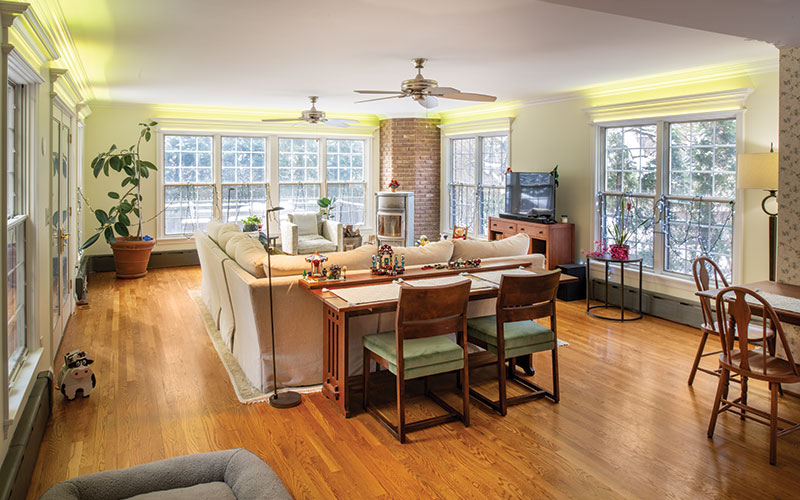
In the existing family room and the new upstairs sitting room outlets were installed under the floorboards to limit the number of wires crisscrossing a room from baseboard outlets. Each outlet is accessed through a wood panel in the floor. The standing lamp behind the couch is over one of those outlets.
Four years may seem like a long time for a renovation but the Chapmans started – unbeknown to them – at the beginning of the COVID pandemic when the supply chain of workers and goods slowed to a crawl. The project also grew along the way as the Chapmans added to their original plans.
In any case, they didn’t count on the amount of disruption the rebuilding would create. “We should have emptied the house of everything and just moved out because there was so much dust,” says John.
Eventually, they rented a one bedroom apartment in the Van Aken District for a year and half and John made sure to visit the house every day to check on the work.
They’re happy with the finished product. “We have enough room so if the kids want to come they don’t have to stay in a hotel,” says John. “And if someone needs a long-term residence, they can live here,” says Pat.
“It’s taken a while longer than we thought,” he says.
“That’s ok,” says Pat softly. “It turned out beautiful.”
So, you want to grow old in your Shaker home and neighborhood. How do you do it?
Jim Karlovec of Karlovec and Company acknowledges that Shaker’s mix of families paying a mortgage, college for their children, and their own retirement makes aging in place a far-off conversation. He recommends keeping a few things in mind as you consider renovations to meet future needs:
- Plan when you are young and before you have done extensive renovations that might have to be gutted – something no one wants to do. “Have the conversation early in adulthood about budgeting for it, so that you can afford it,” Karlovec says.
- Make sure a wheelchair user can get in and out of the house safely as they get older – that could mean widening the doorways, setting up a ramp, or building an elevator or chair lift.
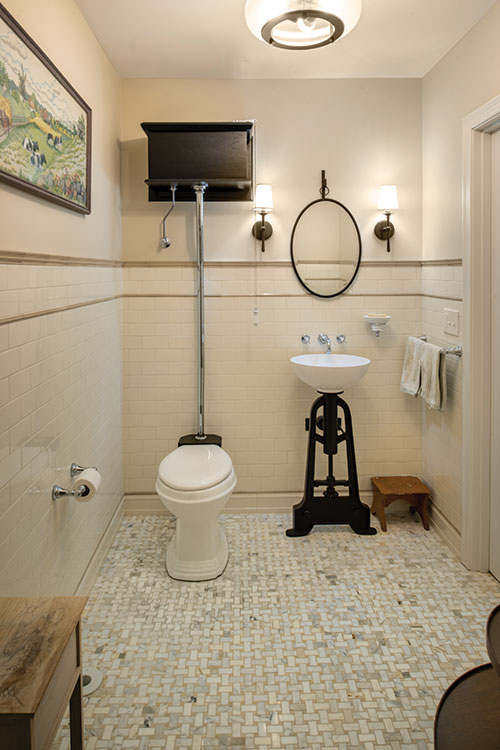
- Expand a powder room, so that you can have access to the toilet and an ADA compliant shower on the first floor.
- Stairs can get tricky as we get older or if we become ill or injured. Consider converting a study, den, or a home office on the first floor into a bedroom.