Shaker’s Grow Not Mow program moves ahead to enhance biodiversity, powered by an ecosystem of helping hands
By Michael Peters
Photos by Jason Miller
Fortunately the City’s Stormwater and Green Space Subcommittee meets every month to offer the City guidance on ways to improve and protect this natural environment.
Their guidance is built on experience in the field, literally. Many of the subcommittee members are practitioners and volunteers with local and regional environmental organizations. Maybe it should then be no surprise that the subcommittee and its volunteers also actively dig, plant, water, and educate in our community to make it greener and healthier for us all.
One of their key initiatives is the Grow Not Mow program. “The Grow Not Mow program grew from early conversations within our subcommittee with regard to the Great American Lawn obsession and the devastating environmental and human health costs of maintaining traditional lawns,” says Subcommittee Chair Julia Larouche. The goal of the program is to create an alternative model for maintaining greenspaces in order to restore and enhance biodiversity and function, starting on city-owned parcels.
Site selection
Beginning in 2021, public lands were identified by the subcommittee as good candidates to return to native meadows and woodlands. This means more growing, planting more native trees and bushes, and removing invasives. And less mowing – saving the City time and money while reducing stormwater runoff.
The two current sites are both along the Doan Brook, one at South Park and Courtland Boulevards and the other at South Park Boulevard and Lee Road. These were selected in part due to the often marshy conditions that make them ideal planting areas but not good candidates for traditional parklands and pose challenges to mowing when the ground is soft.
The goal is to create an alternative model for maintaining greenspaces.
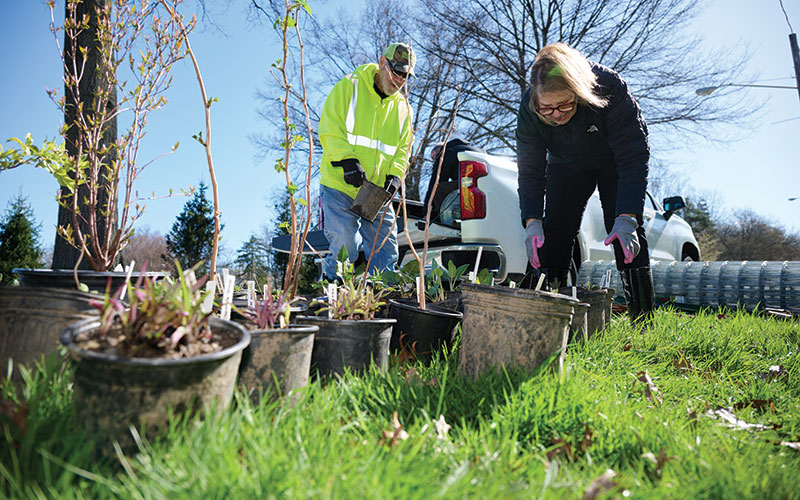
Each spring volunteers organized by the Doan Brook Watershed Partnership (DBWP) assemble on a Saturday afternoon to plant roughly 100 native trees and bushes. “The Doan Brook watershed is an ideal place for Grow Not Mow programs because it is an impacted urban watershed. Any way we can work to slow and reduce stormwater is a great help to the brook and eventually Lake Erie,” says Mo Drinkard, executive director of the DBWP.
Because the water in the Doan Brook goes directly into Lake Erie, and the runoff from streets and yards most likely ends up in the Brook, it is important to consider what goes into storm sewers (no oils or chemicals) and to limit the synthetic fertilizers applied to lawns. This is also where programs like Grow Not Mow, planting species not treated with any chemical fertilizers, can have a big impact. “DBWP is bringing back a watershed-wide water quality monitoring program this year. Programs like Grow Not Mow can help improve some of the metrics we will be monitoring,” says Drinkard.
Perfect mix of plants and volunteers
The selection of the native trees and bushes is led by an experienced team of local volunteers, many of whom also serve on the City’s Tree Advisory Board and have honed their knowledge for years through efforts such as the Friends of Lower Lake. Volunteer John Barber explains how plantings are selected: “We look for trees, shrubs, and flowering plants that ‘belong’ here – species native to northeast Ohio.” That’s important because these plants need to increase biodiversity by providing food and nesting places for native birds and insects, especially native pollinator species. The chosen plants also need to spread naturally, reducing future planting work without requiring frequent maintenance. “Finally, we look for plants that will be beautiful to look at, both up close and from a distance,” says Barber.
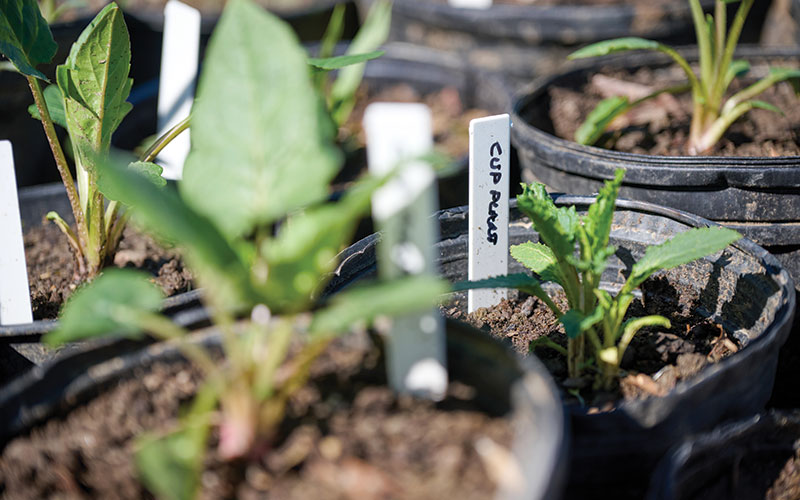
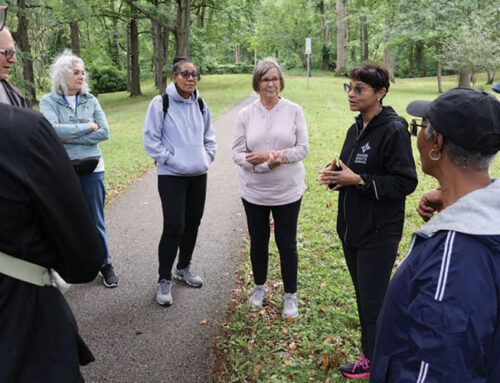
An experienced team se;ects native trees, shrubs and flowering plants for the program.
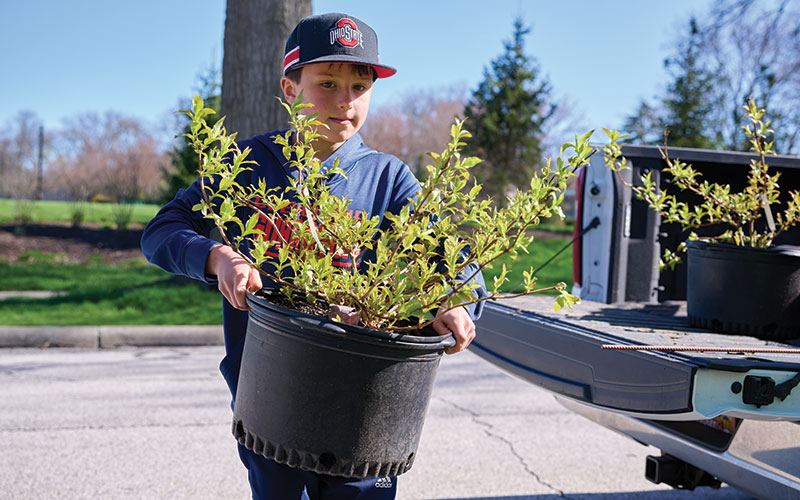
No experience is needed to volunteer, and as Councilmember Nancy Moore, chair of the Tree Advisory Board and member of the Sustainability Committee, shares, “One measure of the Grow Not Mow program’s success in my eyes is that we continue to attract volunteers of all ages who donate their time each year to put their shovels in the ground to ‘plant native’ at our two sites. I love to see five-year-olds helping their parents plant new trees. And I think about these Shaker students coming back when that tree is 20-feet tall. It fills me with hope for the future.”
We continue to attract volunteers of all ages who donate their time each year.
The Grow Not Mow events, which include the removal of invasives during the summer and often another planting event in the fall, bring together a broad range of residents. Volunteers not only help restore the native habitat but learn how to identify invasives in their own yards and plant and care for native species. Some, like residents Nick Fletcher and Tim Kalan, even grow natives in their own yards to donate to the planting events. “These residents have developed expertise in growing native plants from seed, ensuring genetic diversity and hardiness,” says Barber. “We can rest assured that no systemic insecticides or fungicides are used while the plants are being grown.”
In addition to the ‘homegrown’ species, the City purchases plants from local native plant nurseries within a short drive of Shaker Heights. “These nurseries encourage genetic diversity, have plants that are raised in our local climate, and are not treated with systemic chemicals,” says Barber. The subcommittee allocates a portion of its budget to support these activities and these funds are also the required local matching dollars for grant programs such as those through the Cuyahoga Soil and Water Conservation District.
Bringing the ideas back home
Responding in part to this interest residents show for removing invasives and planting natives in their own yards, the Nature Center at Shaker Lakes is working to create a Certified Yard Habitat program to help guide residents in these efforts. This collaborative approach yields multiple benefits that are a win for everyone involved, with increased engagement, more learning opportunities, and tangible benefits to the environment.
Drinkard agrees, “DBWP is glad to have a strong collaboration with Shaker Heights in the Grow Not Mow program. Shaker Heights is doing the right thing by reducing mowing, planting trees, and increasing native vegetation. These actions do benefit wildlife and improve ecological function but also offer tangible economic benefits like stormwater reduction and direct cost savings from reduced maintenance.”
What does the future hold for Grow Not Mow? “I hope that these sites are only the beginning of a widespread program,” says Drinkard. “Shaker Heights is showcasing that Grow Not Mow sites are beautiful, beneficial additions to urban/suburban landscapes. The City has the opportunity to be an exemplar in sustainable leadership with its low cost and effective Grow Not Mow efforts.” This has proven to be true, with organizations as far afield as the Virginia Department of Wildlife Resources contacting the City to learn from the program.
Likewise, Councilmember Moore sums it up nicely, “I hope the Grow Not Mow program can expand to include the restoration of more sites in Shaker that lack tree canopy, where planting native species can sustain a biodiverse environment that is healthier for birds, wildlife, pollinating insects, and people.”
The Grow Not Mow program only selects trees and plants that are considered non-invasive and native to our region. While adding new trees is important to expand the ecosystem that supports birds, pollinators, and other wildlife, it is equally important to remove the invasive trees and bushes that are commonplace in the City. Otherwise these plants compete with and eventually overtake the native species.
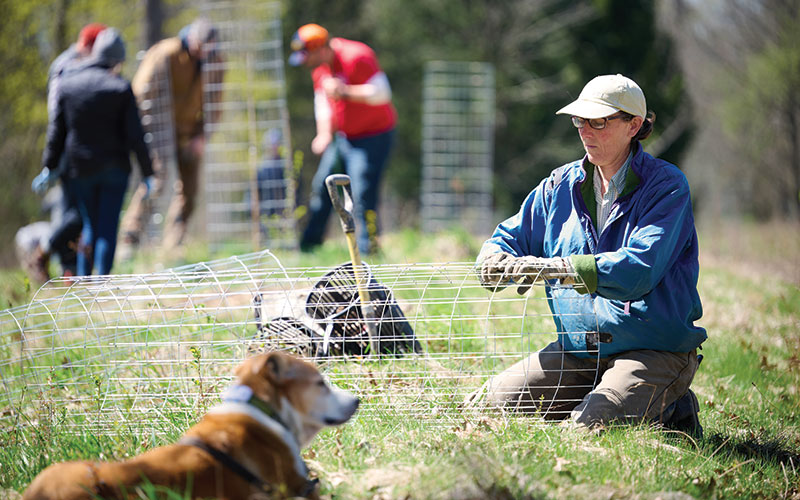
The program encourages residents to do the same in their own yards. You can start by volunteering for a planting day to learn how to select, plant, and care for young trees and bushes. This includes the critical step of protection from deer, including using metal or plastic tree protection.