Helping children and parents navigate the complexities of early childhood has been the focus of Hanna Perkins Center for Child Development, a unique resource in the heart of Shaker. Now this focus broadens to programs that train the professionals who support children during challenging growth moments.
By Sharon Holdbrook

Photos by Robert Muller
The center, which is tucked in a quiet residential neighborhood on Malvern Road, looks very much like its former elementary school self. (The building housed Malvern Elementary School until 1987.) Outside, a community garden and playground are open for neighbors to enjoy in good weather. Inside, Hanna Perkins is home to bright classrooms, cozy gathering places, therapy and administrative offices, and even a research library.
“Growing up is a challenge for everyone. We’re here for all children.”
The center is nationally known for its expertise in a unique, psychoanalytic approach. Based on the work of experts like Anna Freud, Hanna Perkins focuses first on the inner life of the child – their feelings, pleasant or unpleasant, and their experience of the world around them. Instead of simply trying to control a child’s behavior, the psychoanalytic approach works with both parent and child to understand the child as a starting point.
Using this approach, Hanna Perkins has long focused on three core service areas: its school for young children; therapeutic services for parents and kids; and continuing education and consultation to train and advise other professionals.
A Redoubled Focus
As CEO Jennifer Harris came on board last summer and the nonprofit celebrates 75 years in 2026, Hanna Perkins is redoubling its focus on the youngest children and introducing multiple new programs.
While there are many quality kindergartens, says Barbara Streeter, consulting therapist, including the one at Hanna Perkins, there is a gap in many other services that the nonprofit is moving to fill. One such gap is services for babies in neonatal intensive care units and their families. By definition, NICU babies had a difficult entry into the world. Medical follow-ups tend to focus on the baby’s physical well-being. Hanna Perkins’ new program, which is set to pilot in early 2026 in partnership with University Hospitals, aims to provide ongoing support for parents and for the child’s development and behavior.
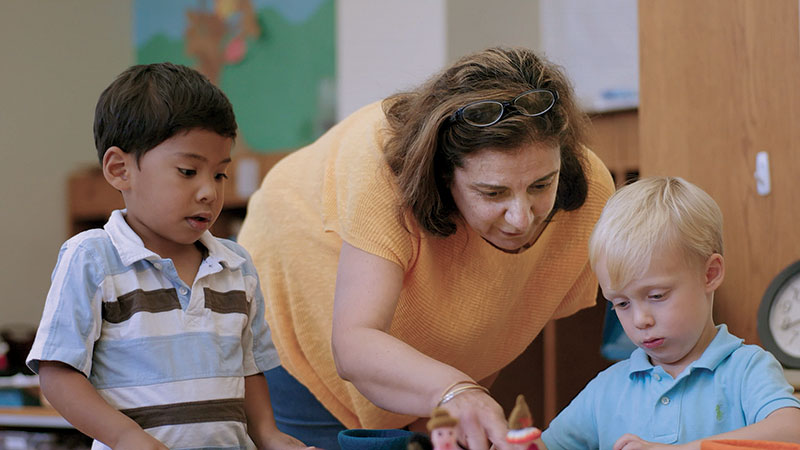
Facilitating attachment is key for the benefit of both parent and child, says Kim Bell, Ph.D., clinical director for Hanna Perkins. Postpartum issues – or just new parenthood – can leave caregivers feeling alone or uncertain. The new program will offer practical support, but it’s not just about learning techniques, says Streeter. “It’s really about appreciating the world of the infant and how to be attuned to your infant.”
“As soon as a parent starts to have a concern, we will be happy to, at the very least, have a consultation.”
January 2026 also brings a new two-day toddler class to Hanna Perkins. Parents attend with their toddlers, who are usually about 18 months up to age three, although some little ones may be toddling a bit earlier and ready to join before 18 months. Admission is on a rolling basis.
Finally, Hanna Perkins introduced autism testing in December, along with IQ and ADHD testing. This will help fill a services gap that has resulted in many local families waiting one to one and a half years for autism testing.
“As soon as a parent starts to have a concern, we will be happy to, at the very least, have a consultation with them and then make our recommendations of whether or not it’s time to test or if there are other avenues they can pursue before then,” says Bell.
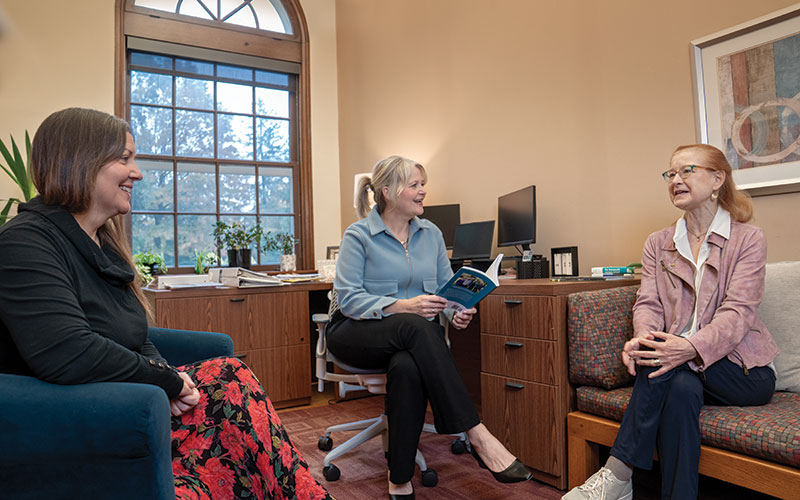
From left: Kim Bell, clinical director, Jennifer Harris, CEO, and Barbara Streeter, consulting therapist.
“I don’t ever want to turn away a parent who has a gut feeling,” she says. Even if testing isn’t called for, Bell says, “I work towards helping them understand what they’re seeing.” CEO Harris agrees. “If a parent’s having a gut feeling, there’s obviously something causing that. So at the least they could come and begin clinical services to begin to understand the child’s behavior.”
It can be hard to find therapy for children under the age of six, but this is something Hanna Perkins can help with. As with all Hanna Perkins programming and services, the parent-child relationship is at the heart of it.
Life-Chaging Support
The best fit for Hanna Perkins, says Harris, is a family in which the parents are ready to receive support and take time to do that. That means parent involvement, whether it’s therapy or a toddler or infant program. “We can’t do what we do and teach parents to understand their child’s behavior if the parent isn’t there.”
 High costs of therapeutic services and preschool programs can also be a barrier for many families. But, says Bell, “We’re very focused in all of the areas of our agency on being accessible regardless of income bracket.” Hanna Perkins accepts Medicaid and private insurance, and it also has sliding fee scales based on family income. Beyond that, there may also be scholarships. “We don’t want to turn away any family for inability to pay that needs services,” says Streeter.
As a result, Hanna Perkins’ outpatient clinic clientele is pretty evenly distributed across socioeconomic status, says Bell. “We have spent 75 years treating people regardless of ability to pay.”
The center’s focus on service goes beyond financial accessibility. Hanna Perkins works with and trains 800-900 professionals a year – hospital personnel all
over the state; child life specialists who work with hospitalized children; and teachers at preschools and childcare centers. Across all levels of school, the highest expulsion rate is in preschool. Hanna Perkins works to keep those children in school by training their teachers to work more effectively with children who are having a hard time.
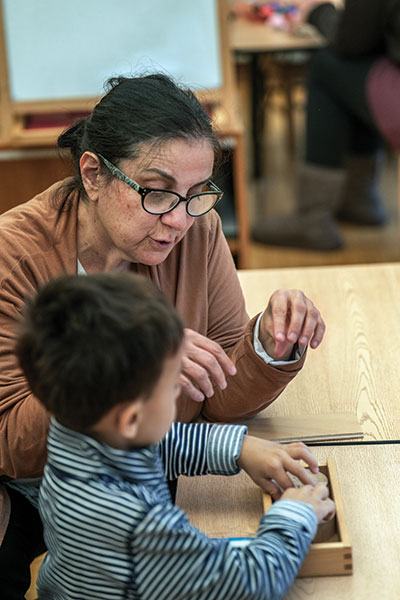
Hanna Perkins is working to partner with the new Ludlow Early Learning Center, Shaker’s universal pre-K program. CEO Jennifer Harris and Ludlow Principal Craig Caroff have been meeting to discuss how they can support each other. “We realize we need to be each other’s best partner,” says Harris. For example, Hanna Perkins might be a preschool alternative for a Ludlow child who needs a smaller learning environment. (Hanna Perkins’ preschool program has three teachers for up to 15 children, a consulting therapist for the classroom and a trained therapist who serves as a “family helper” for each family.)
Hanna Perkins takes pride in its longstanding reputation for meeting children where they are and helping them (and their families) grow from there. “Growing up is a challenge for everyone,” says Streeter. “We’re here for all children.”
Learn more
 Help for Parents
If you have a concern about your young child, and you don’t know who to ask for help – or whether you even need help – you can give Hanna Perkins a call at 216-991-4472. You will be referred to the person who can best discuss your concern and whether Hanna Perkins is the right place for your family. “We talk to everyone who calls us,” says Kim Bell, Ph.D., clinical director. Parents can also find resources at the Hanna Perkins website, including links to the center’s podcast, “The Hidden Language of Children;” videos; and other materials.
Volunteer Opportunities
While volunteers can’t work directly with children at Hanna Perkins, there are numerous ways to contribute to its mission. The nonprofit can always use help with administration, marketing, social media, website development, graphic design, and landscaping. Board members are also sought, especially those with experience in facilities, marketing, finance, or fundraising.