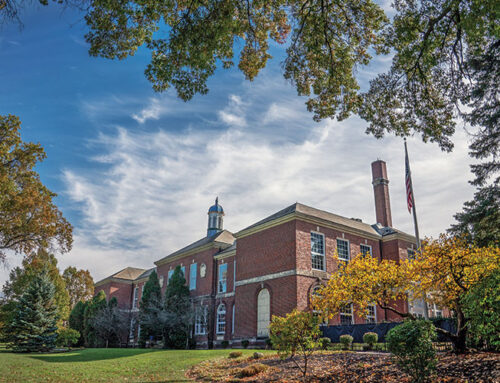
International Baccalaureate (IB) is an educational framework used at 5,800 schools in 162 nations reaching 1.95 million students. The Shaker Heights City School District is one of just nine school districts in North America to offer the prestigious International Baccalaureate Programme to every student at every grade level.
By Julie Hullett
Shaker Heights is a community known for its diversity, open-mindedness, and education. Families generally do not end up here by accident – they seek out Shaker Heights with intention because they share these values. In a community full of lifelong learners who make a difference in the world, it makes sense to cultivate the next generation of leaders with the same mindset. International Baccalaureate (IB) has proven to be the best tool to meet this goal.
IB is an educational framework that empowers school-aged students to take ownership of their own learning and helps them develop future-ready skills to make a difference and thrive in a world that changes fast. The Shaker Heights City School District has been a PreK-12 IB district for a decade, and its success is clear.
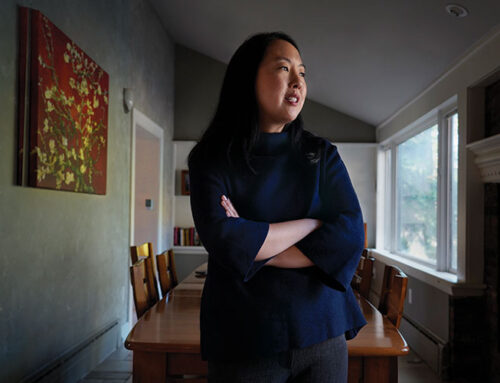
“Shaker Heights is an IB community,” says Myriam Neil, a parent and staff member at Shaker Heights High School. “We have people who are open minded and we are looking for diversity in all aspects. This is such a rare combination to find in one place. People come to Shaker Heights because they know this city has a mission, and they want to help foster that mission.”
Why IB?
Shaker officially began its journey toward becoming an IB World School in 2008 under the leadership of then- Superintendent Mark Freeman. Shaker Heights High School was the first school in the District to be certified by the IB in 2010, with the remaining schools to follow soon after.
IB is an internationally recognized educational framework with a rigorous curriculum, featuring a global focus and emphasizing creative problem-solving, hands-on projects, inquiry-based learning, and community service. IB comprises three distinct programs for each age group: the Primary Years Programme (PYP) for PreK-5; the Middle Years Programme (MYP) for Grades 6-10; and the Diploma Programme for Grades 11-12. All Shaker students study with the IB framework from PreK-10, and students may choose to participate in the Diploma Programme.
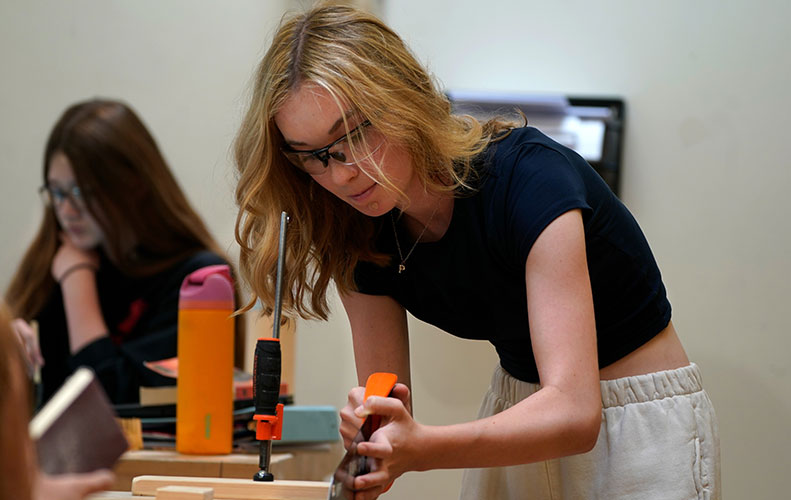
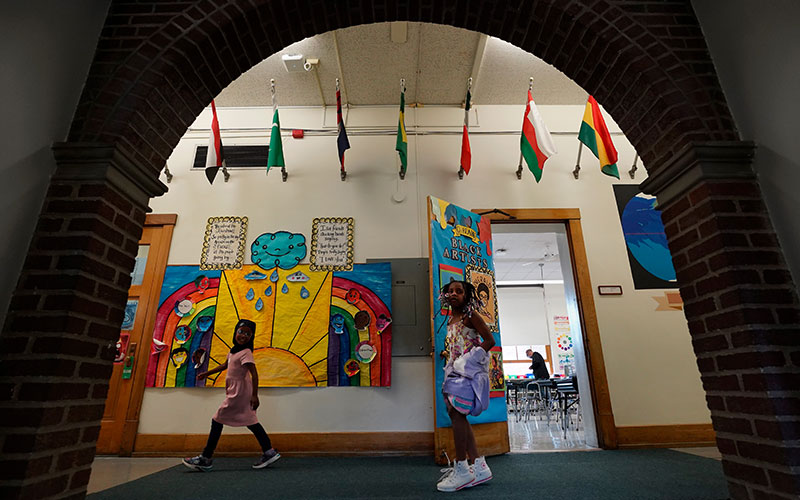
The IB program allows Pre-K to 12th grade students to engage in hands-on learning
As IB learners, Shaker students continue to study traditional subjects, meeting all state academic content standards. They are also encouraged to develop the ten attributes of an IB Learner: inquirer, knowledgeable, thinker, communicator, principled, open-minded, caring, risk-taker, balanced, and reflective.
One of the key benefits of IB is the focus on communication and collaboration. Rather than studying each academic standard in a silo, students are encouraged to make connections and develop broad conceptual understanding through the use of critical and creative thinking, research, and self-management.
Perhaps the most important part of IB is its impact on educational equity, says John Moore, director of curriculum and instruction for the Shaker Heights Schools. Moore says nationwide research shows that historically marginalized youth often experience lower expectations, lower standards, and mostly teacher-centered instruction.
 “IB flips that on its head. IB requires inquiry, higher-order thinking, application, and projects – the things we know are best for learners. In Shaker Heights, we said that’s what we’re going to do for all children,” Moore says. “The real value of IB for this district is the commitment and guarantee that high-quality learning environments are available to all children.”
Neil says IB emphasizes the traits that make us human. In a world where the use of artificial intelligence is widespread, students who have studied in an IB district learn skills that no generative AI could ever replace. Students learn how to communicate and collaborate, think critically and creatively, and develop intercultural understanding, and respect.
“For me, IB is not just an educational framework,” Neil says. “It is more like a way of living and respecting other people.”
Pre-K Implementation
IB values can be seen in every grade level, from PreK through Grade 12. One recent change is the implementation of Wit and Wisdom, a new English Language Arts curriculum for Grades K-5. One critical point with IB is that subjects are integrated. Rather than studying math, science, social studies, and language arts separately, teachers use the IB framework to build one IB Unit that implements multiple academic standards, and draws connections between them.
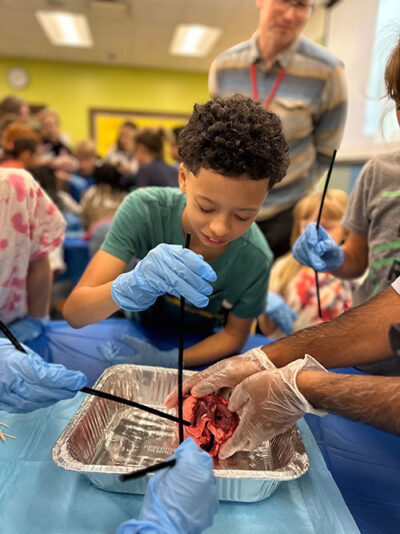
Wit and Wisdom, although not specifically an IB curriculum, integrates well with IB. It integrates science and social studies into the educational materials for language arts. Grade 4 students study an IB Unit called “A Great Heart” and the IB Learner Profile attribute “Caring.” This unit incorporates reading stories about caring people, while also learning about the cardiovascular system and how a human heart works.
“IB reflects how people learn in the real world. We learn in an integrated way,” Moore says. “Often in school, we break subjects down, but IB requires that they are integrated. It’s meaningful learning that engages students.”
In Shaker, IB starts in preschool at the Ludlow Early Learning Center. Preschool IB Coordinator Amy Brodsky says Ludlow students are exposed to the attributes of the IB Learner Profile.
“Our earliest learners start making connections, learning about themselves and how to gain multiple perspectives about the world and each other starting at three years old,” she says.
While all Shaker students learn through the IB programmes from preschool through Grade 10, at the end of their sophomore year, students may elect to continue in the IB Diploma Programme. The Diploma Programme has three parts to its core: CAS (Creativity, Action, Service), the Theory of Knowledge course (TOK), and a 4,000-word extended essay.
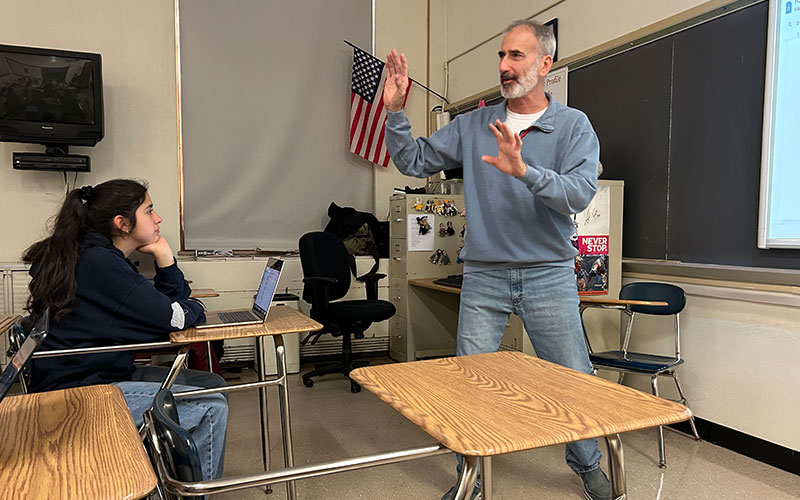
Chuck Kelly leading a class at Shaker Heights High School.
Laurence Sison, a senior in the Diploma Programme, says he was initially interested in the Diploma Programme because his friends were taking the same classes. Once the school year started, though, he saw that IB required him to think differently. IB requires a lot of writing, Sison says, but it will be a great tool after graduation. He also notes the importance of critical thinking skills, which he is learning in the Diploma Programme.
“With IB, you have to think critically. You can’t just read the text and answer the questions,” Sison says. “You have to think about how to apply this information and incorporate other perspectives. IB is a different way of learning.”
Chuck Kelly teaches a literature course for seniors in the Diploma Programme. He says the class is based on student-led discussions on a variety of texts, including translated texts, such as “The House of the Spirits” by Isabel Allende, and texts originally written in English, such as “Beloved” by Toni Morrison.
“We talk about global issues,” Kelly says. “There’s an international sense of the IB Programme that becomes part of the literature we teach.”
At the end of each programme, students participate in an exhibition to showcase their research skills. For the PYP Exhibition, Grade 5 students form groups to conduct an in-depth inquiry into real-life challenges. This inquiry develops students’ research skills, engages them with experts in a variety of subject areas, and encourages them to take responsible action.
MYP includes two exhibitions: Community Project in Grade 8 and Personal Project in Grade 10. For Community Project, students take action on a community issue of their choice, such as homelessness or water pollution. For Personal Project, students create a product, event, or experience related to a passion of theirs. Students in the Diploma Programme conclude the school year with the Theory of Knowledge Exhibition and an Extended Essay. The essay, a 4,000-word research project in a subject of a student’s choosing, has been likened to an honors thesis in college and makes the transition to higher education seamless.
Real World Preparedness
Felecia Hamilton, a 2018 Shaker Heights High School graduate and teacher at Beachwood High School, says her experience at Shaker shaped her professional career. Hamilton participated in the IB Diploma Programme, and she ties IB values into her work as a teacher. She teaches U.S. history, sociology, women’s studies, and AP African American studies. At the start of her career, Hamilton found herself reflecting on IB, and decided to make her lessons student-centered, the same as her classes at Shaker Heights High School.
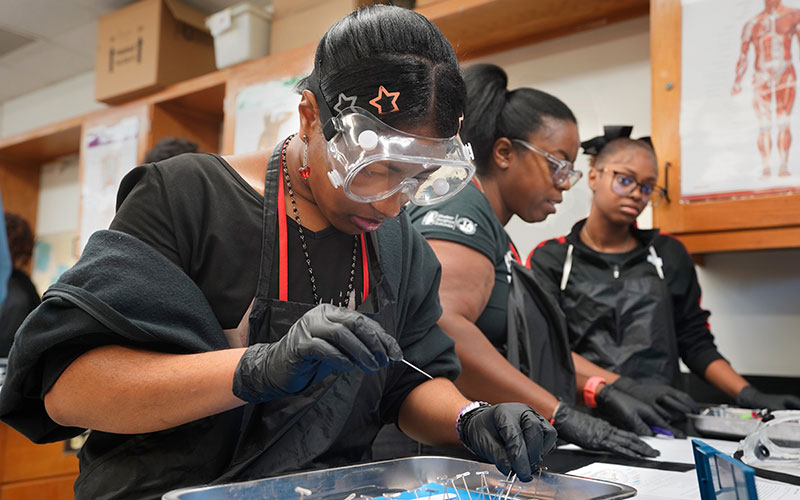
“IB totally shaped my teaching philosophy and how I want kids to feel while they’re learning,” she says.
Emma Neil (SHHS ’18) says IB encourages students to be well-rounded. IB builds a community around a love of learning, she says. It aligns with Shaker’s own values for its students, including participating in the arts and community service. Most importantly, IB develops students as critical thinkers to address real-world challenges.
“We’re in an era where the most important thing to learn is critical thinking because AI can do a lot of things for you,” Neil says. “IB helps students become engaged citizens and have a meaningful life.”
Ten years in, Shaker educators know they are on the right track with the International Baccalaureate Programme. The Shaker Heights community values culturally competent, global citizens who bring communication, creativity, and collaboration to the table. In a time of immense polarization, the IB explicitly teaches students to be open minded, seek diverse perspectives, and open lines of communication. These teachable skills are more essential than ever.
“When you look at the impact on children in the context of the current climate, now is our time to be leaning in and investing in IB,” Moore says. “I don’t think we will regret helping to develop a generation of passionate, knowledgeable, and interculturally competent people who take action to improve our world. We want to be on that side of history.” SL
Julie Hullett is the communications specialist for the Shaker Heights City School District