For those battling Parkinson’s, conquering a climbing wall can bring back a sense of normalcy.
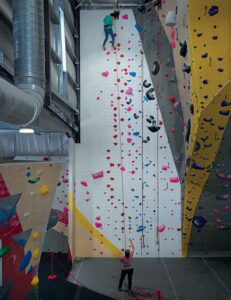
Shaker Rocks Climbing Gym. Photos by Gus Chan.
By Zach Lewis
Like a guide on a difficult ascent, Shaker Rocks is blazing a trail in the arena of Parkinson’s disease.
Already a destination for climbers everywhere, the iconic rock gym near the Van Aken District is now hosting a different and even more inspiring crowd, a group using its facilities to delay or even reverse stubborn Parkinson’s symptoms.
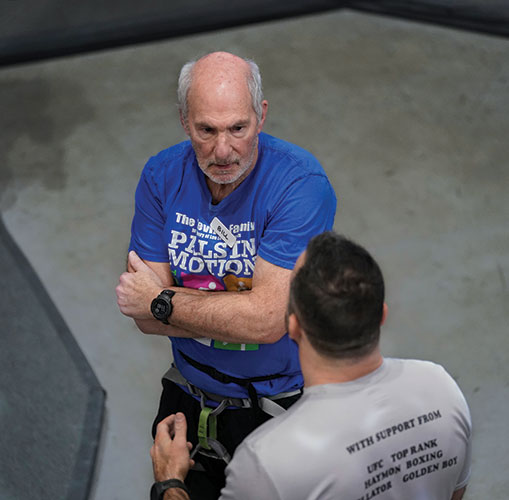
It’s working, too. Guests from InMotion, a Beachwood-based provider of free, comprehensive Parkinson’s wellness programs, are finding that rock climbing is more than good exercise or a pleasant pastime. It’s one of the best non-medical therapies for their condition, period.
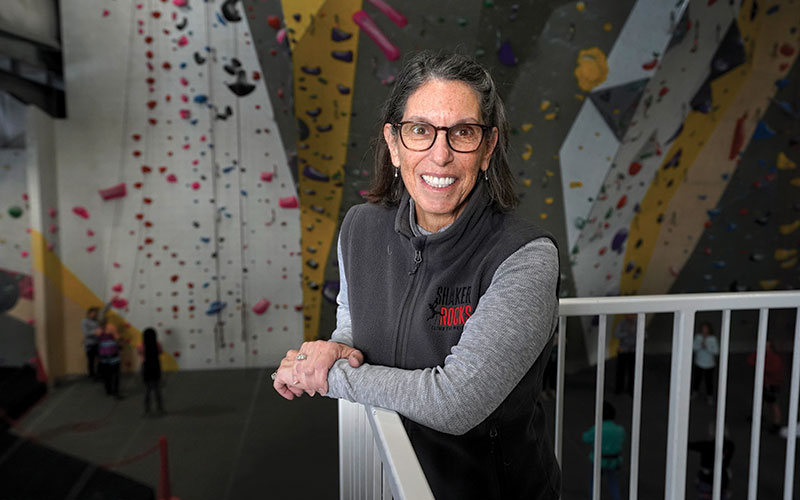
“It’s good for us but it’s absolutely great for them,” says Annie Richman, owner and developer of Shaker Rocks. “I know a little about Parkinson’s but a lot about climbing, and I can see this is an amazing thing. The benefits just blow them away.”
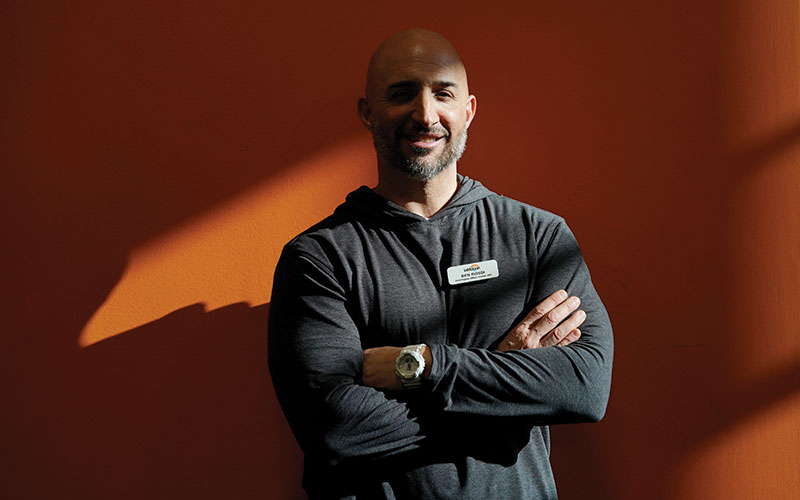
Richman is not the first to notice the effects of climbing on Parkinson’s disease. Neither is Ben Rossi, chief program officer at InMotion and a former fitness trainer, who calls his work with Parkinson’s patients “a whole new passion in life, a blessing.”
Both learned about it from Sportrock Climbing Centers, a franchise in the Washington, DC area, whose “Up Ending Parkinsons” program – on which InMotion’s program is based – caught the eye of many in the fitness community and was recently featured on the weekly news show, CBS Sunday Morning.
I know a little about Parkinson’s but a lot about climbing, and I can see this is an amazing thing. The benefits just blow them away.
“Between the clear gains in confidence and grip strength and the noticeable improvements in cognitive skills such as planning and processing, climbing may be the perfect activity,” Rossi says.
Strong as that endorsement is, the most compelling arguments for climbing as therapy come not from Shaker Rocks or InMotion but from the participants, from those actively using rock climbing to combat Parkinson’s, and the volunteers who facilitate their efforts.
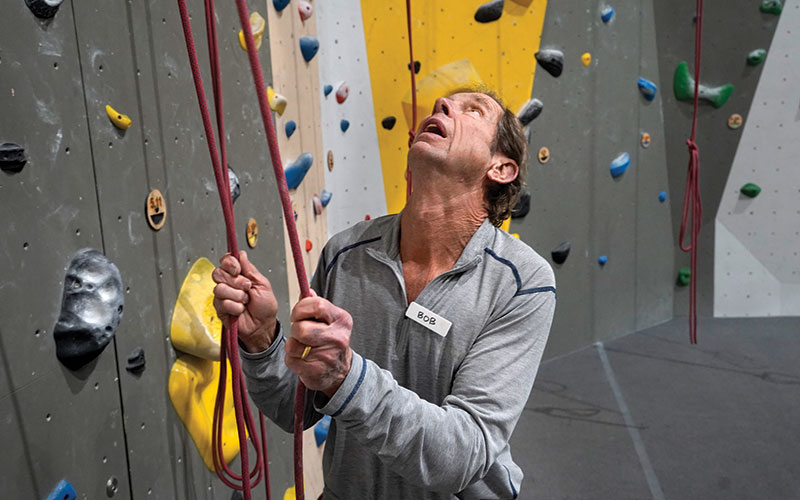
Take Shaker resident Bob Tucker, who was diagnosed in 2020. For years, he’d watched his son go rock climbing, admiring his skill and athleticism. Never, though, did he take part himself. Now he regards the sport as a “game changer,” the most beneficial to him of InMotion’s many offerings.
Until he started climbing at Shaker Rocks, “It had never occurred to us that rock climbing might be an activity that would help slow down the progression of my Parkinson’s,” Tucker says. “But the physical and mental challenges of rock climbing are proving to be exactly the kind of exercise that helps me feel better every day.
Volunteers get something out of it, too. Gwen Hobbs, an active climber still recovering from chemotherapy, says she finds the experience of helping 15-20 people each week overcome physical obstacles deeply rewarding.
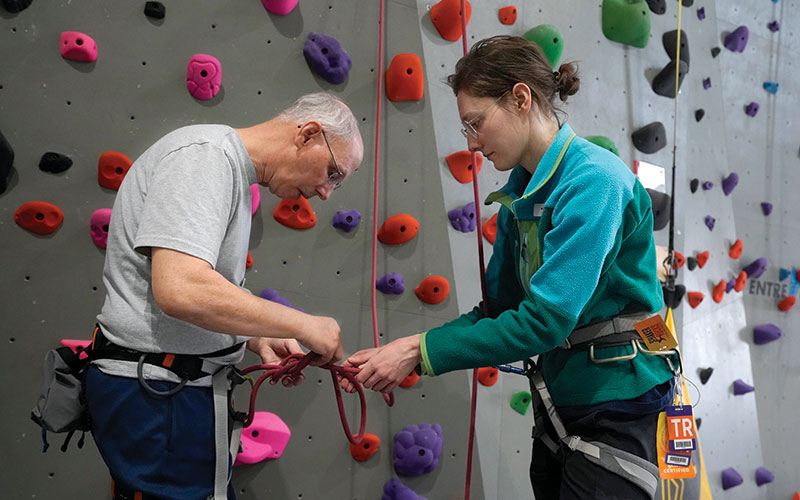
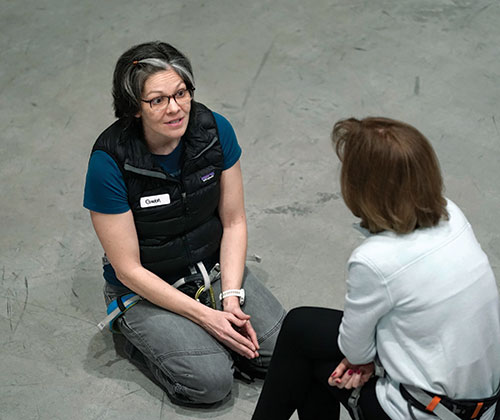
“They get so much stronger,” she says. “They gain so much confidence and there’s so much camaraderie. It’s my favorite day of the week.”
Climbing isn’t for everyone with Parkinson’s, Rossi says, noting those in advanced stages of the disease. For those in earlier stages, however, climbing appears to be a “match made in heaven,” he says, an effective means of maintaining an active lifestyle.
“People just want to keep doing everything they’ve always done, and this translates so well,” Rossi says. “These people, they’re such warriors. They just battle.”